Home
We investigate the origins and ecological consequences of phenotypic variation.
Dept. of Zoology & Physiology
University of Wyoming
Laramie, Wyoming 82071
sgiery@uywo.edu
News
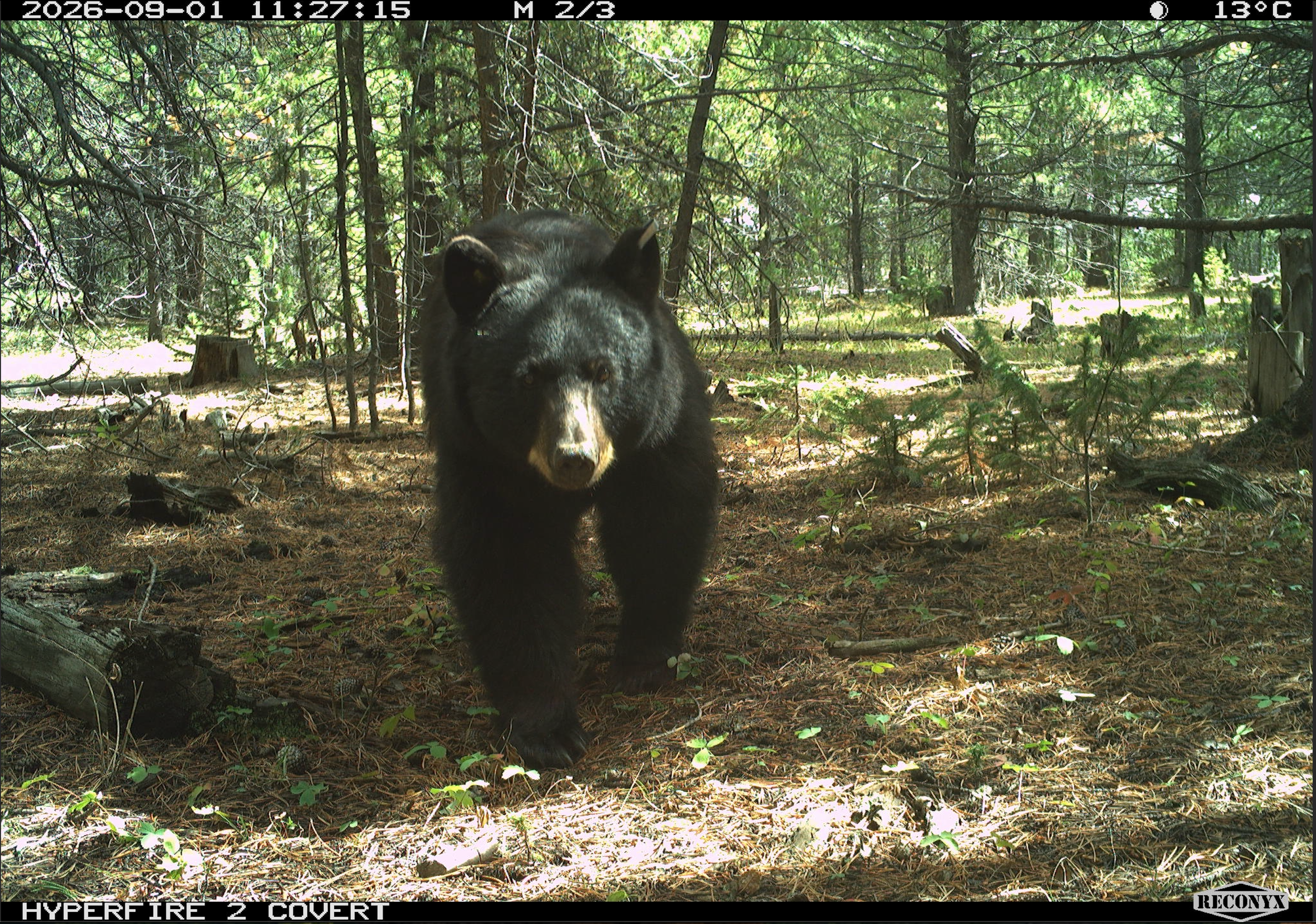
We just completed our eighth year of Snapshot USA (https://www.snapshot-usa.org/) - a nationwide synchronized camera trap study of wildlife. Being our first year doing these surveys west of the Mississippi (prior surveys were in Michigan, Pennsylvania, North Carolina, and Ohio) we were excited to see what we’d find. Here’s a quick report of what we captured only 30 miles west of Laramie!
The Wyoming Herpetological Society (LINK) has organized the first annual Wyoming Herpetology Symposium to be held on the University of Wyoming campus in Laramie on November 14th, 2026 from 10am until 4pm. This is a great opportunity to connect with fellow herpetological enthusiasts.
Registration is free!
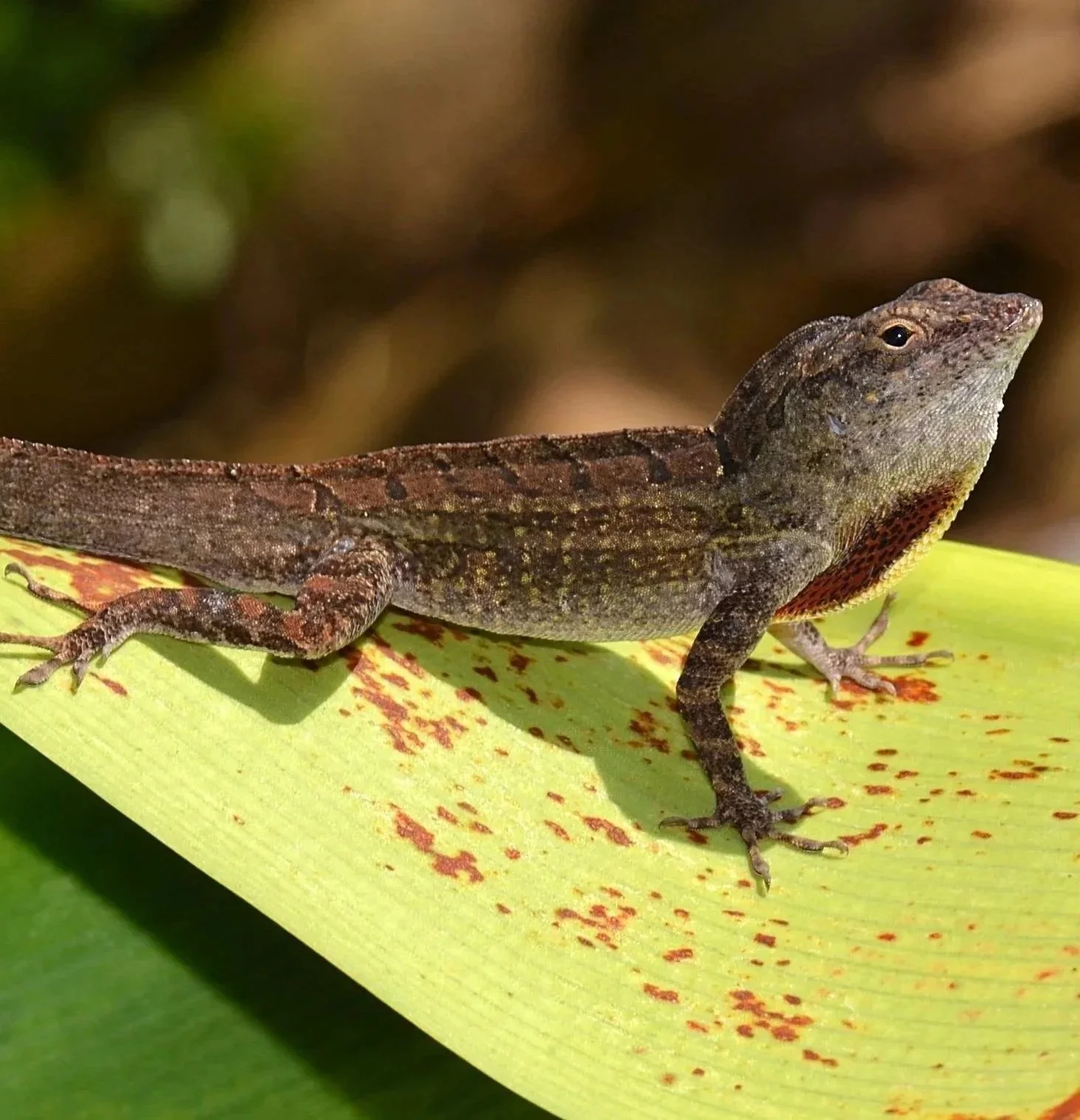
In brief, we find Florida-wide morphological and genomic signatures of hurricane-driven evolution of limbs and toe pads in the Brown anole.
Adult male brown anole (Anolis sagrei). Credit: Jonathan Losos.
In spring 2026 the lab is moving to the Department of Zoology and Physiology at the University of Wyoming!
We have been awarded a new NSF grant to collate and analyze decades of ecological and evolutionary data from The Bahamas. We’re super excited to get started!
We received a generous grant from the 1804 Fund to expand and upgrade our mesocosm facility! These funds will pay for a wide range of upgrades to our mesocosm facility here at OU! There are too many enhancements to list here, but the primary item will be installation of a high-capacity, all-season electrical supply dedicated to the mesocosm facility. This upgrade will enable a much wider range of experiments as well as continuous sensing of water parameters. Thanks to the 1804 Fund for it’s generous support!
Can intraspecific variation in a widespread, common salamander affect aquatic ecosystems? That’s the question that Jon Davenport (Appalachian State University) and I set out to answer. Using a mesocosm experiment we show that yes, evolved intraspecific color variation in Spotted Salamanders just might be ecologically relevant!
Positions are focused on the ecology and evolution of reptiles and amphibians. Prior expertise in these organisms is not required. See the OU webpage for PACE application information: www.ohio.edu/financial-aid/types/employment/pace
The Department of Biological Sciences at OU has a great foundation in Evolutionary Ecology and I’m pleased to be joining this group of tremendous researchers. Prospective graduate students and interested postdocs should use this form to inquire about opportunities in the lab.
Ohio University is located in Athens— a small, affordable town nestled in the low hills of southeastern Ohio. Come join us!
How will species respond to climate change? Will their ranges expand as mechanisms limiting their geographic range are weakened? In this new paper led by Mark Urban, we develop a mechanistic model that explains current distribution of marbled salamanders at their northern range limit and then project their range expansion given multiple climate change scenarios. The upshot is that marbled salamanders are likely to occupy a larger fraction of ponds and will expand their range north over the next century. A terrific integrative effort by the Urban lab!!
We use natural and human-disturbed ecosystems to identify the ecological and evolutionary processes that influence population persistence and ecological function.